Breast Health After 40: Early Signs, Mammograms & Habits (2026)
Medical disclaimer: This article is for general information only and is not medical advice. Breast health decisions — including when to start mammograms — are personal and should be made with your own doctor, who knows your history and risk factors. If you notice any breast change, call your doctor promptly rather than waiting for your next screening.
Why Breast Health Deserves Your Attention After 40
Turning 40 brings a lot of changes — and one of the most important is how you care for your breasts. Breast cancer risk rises with age, and most diagnoses happen in women over 50. The good news? When breast cancer is found early, treatment is far more effective and often less aggressive. That is why your 40s are the decade to get serious about screening, learn what is normal for your body, and build habits that support lifelong breast health.
This guide walks you through the early warning signs to watch for, current mammogram guidelines, and five practical habits — all in plain language, with no scare tactics. Knowledge is power, and this is one area where a little knowledge genuinely saves lives.
Early Warning Signs: Know What Is Normal for You
The single most powerful tool you have is familiarity with your own body. No one knows your breasts better than you do. Breast self-awareness — noticing how your breasts normally look and feel, and reporting any change — is encouraged by many health organizations alongside regular screening.
Contact your doctor promptly if you notice any of the following:
- A new lump or thickening in the breast or underarm area. Most lumps turn out to be benign (non-cancerous), but every new lump deserves a professional check.
- A change in breast size or shape, including swelling, dimpling, or puckering of the skin.
- Nipple changes — discharge (other than breast milk), the nipple turning inward, or new redness, flakiness, or crusting around the nipple.
- Skin changes on the breast, such as redness, warmth, or an orange-peel texture.
- Pain in one spot that does not go away. Breast pain is common and usually hormonal, but persistent pain in a single area should be evaluated.
Remember: finding a change does not mean you have cancer. It means you need answers — and getting them quickly is always the right call. If stress or poor sleep is making it harder to stay on top of self-checks, our guide on waking up at 3 a.m. during menopause may help you reclaim restful nights.
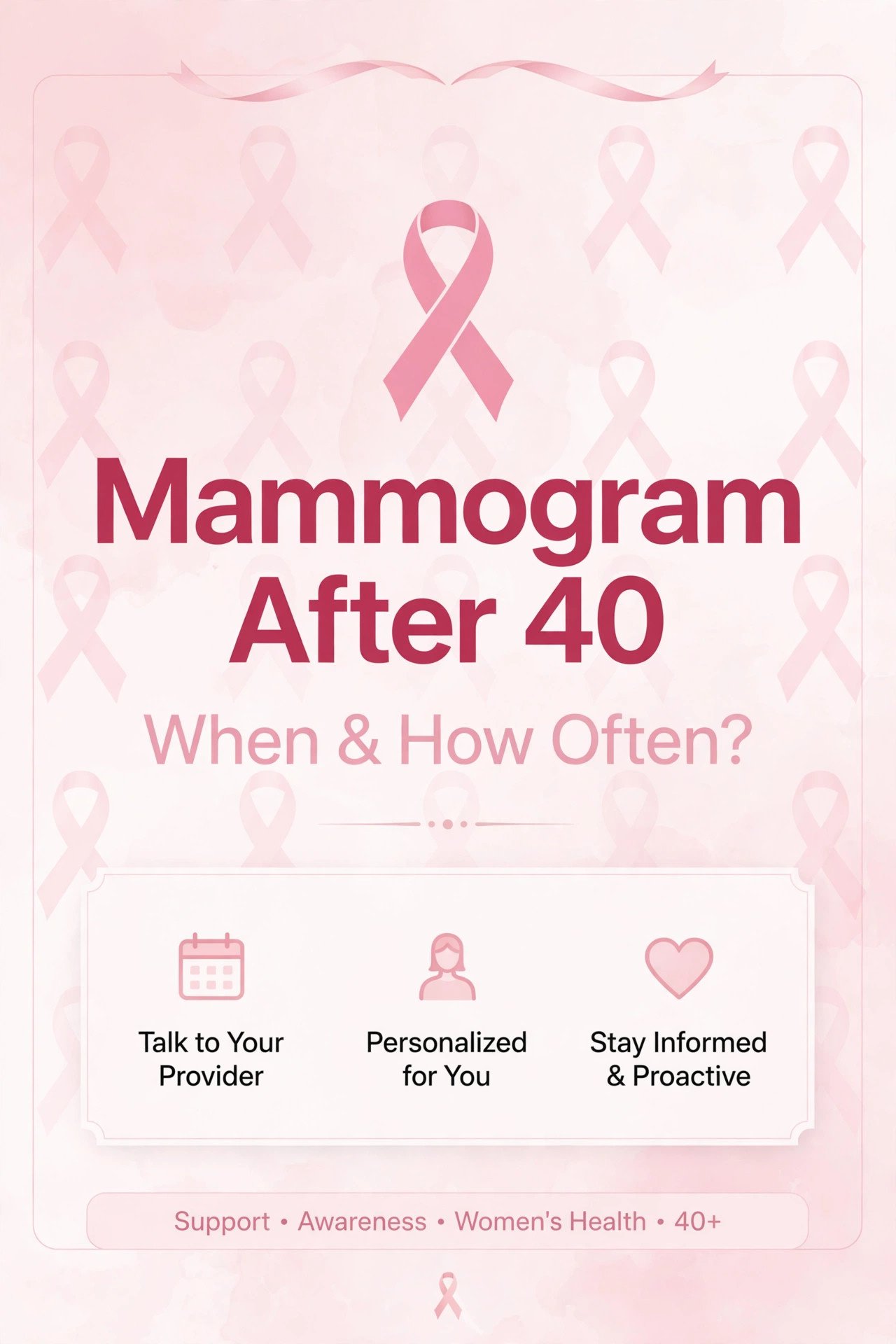
Mammogram Guidelines: When to Start and How Often
Mammograms can find breast cancer before you can feel it — sometimes years earlier. But guidelines differ slightly between expert organizations, which can be confusing. Here is what the major bodies currently recommend for women at average risk:
- U.S. Preventive Services Task Force (USPSTF, updated 2024): Get a mammogram every two years, starting at age 40 and continuing through age 74.
- American Cancer Society (ACS): Women ages 40 to 44 should have the option to start yearly screening; women 45 to 54 should get mammograms every year; women 55 and older can switch to every two years (or continue yearly if they prefer).
- American College of Radiology: Yearly mammograms starting at age 40.
The bottom line: 40 is the age to have the conversation with your doctor. If you have a family history of breast cancer, dense breasts, or a known genetic change (like BRCA), your doctor may recommend starting earlier or adding supplemental screening such as MRI or ultrasound. Dense breast tissue — which is common — can make mammograms harder to read, so ask your doctor whether your mammogram report mentions density and what that means for you.
5 Healthy Habits That Support Breast Health After 40
Screening finds cancer early, but your daily habits shape your overall risk. These five are backed by major health organizations:
1. Maintain a healthy weight
Weight gain after menopause is linked to higher breast cancer risk. You do not need a dramatic transformation — steady, sustainable habits matter most. If nutrition feels overwhelming, start with the basics: our protein calculator for women over 40 can help you get enough protein to preserve muscle as you age.
2. Limit alcohol
Alcohol is one of the clearest lifestyle risk factors for breast cancer — risk rises with the amount you drink. If you drink, less is better. Many women find that cutting back also improves sleep and energy, which makes everything else easier.
3. Stay physically active
Regular movement — brisk walking, swimming, dancing, strength training — is associated with lower breast cancer risk. Aim for activity you genuinely enjoy, because consistency beats intensity. Even 30 minutes of walking most days makes a difference.
4. Know your family history
Having a close relative with breast or ovarian cancer can raise your risk, and it may change your screening plan. If you are not sure about your family history, ask relatives at the next gathering — and share what you learn with your doctor.
5. Keep up with regular screening
The best screening plan is the one you actually follow. Put your mammogram on the calendar like any other important appointment, and do not skip years because you feel fine — screening is for when you feel fine. Between mammograms, stay breast-aware: if something changes, call your doctor right away. Staying well-hydrated supports overall health too — check our water intake calculator to see if you are drinking enough.
When to Call Your Doctor
Do not wait for your next scheduled mammogram if you notice:
- Any new lump or thickening in the breast or armpit. Don’t wait to see if it goes away.
- Nipple discharge, especially if bloody or from one breast only
- Skin changes such as dimpling, redness, or an orange-peel texture
- A nipple that newly turns inward
- Swelling in the armpit or around the collarbone
Calling promptly is not overreacting — it is exactly what doctors want you to do. Most evaluations turn out fine, and the peace of mind is worth the appointment.
Your 40s and beyond bring plenty of health topics worth attention — from bladder changes (see our bladder leak solutions by symptom guide) to sleep and hormones. Breast health belongs at the top of that list, and now you know exactly what to do about it.
Sources & References
- American Cancer Society — Breast Cancer Screening Guidelines: cancer.org
- U.S. Preventive Services Task Force — Breast Cancer Screening Recommendation (2024): uspreventiveservicestaskforce.org
- Centers for Disease Control and Prevention — Breast Cancer Screening: cdc.gov
- National Cancer Institute — Breast Cancer Screening (PDQ): cancer.gov
Frequently Asked Questions
At what age should I start getting mammograms?
For women at average risk, major guidelines now point to age 40 as the time to start the conversation. The USPSTF recommends mammograms every two years from 40 through 74; the American Cancer Society offers yearly screening as an option from 40 and recommends it yearly from 45 to 54. Your doctor can help you choose the schedule that fits your risk.
Are mammograms painful?
Most women feel pressure or brief discomfort rather than real pain. The compression lasts only a few seconds per image. Scheduling your mammogram the week after your period — when breasts tend to be less tender — can help.
What does it mean if I have dense breasts?
Dense breasts have more glandular tissue and less fat, which is common and not abnormal. Dense tissue can make mammograms harder to read, so your report may note it. Ask your doctor whether additional screening makes sense for you.
If no one in my family had breast cancer, do I still need screening?
Yes. Most women diagnosed with breast cancer have no family history of the disease. Family history raises risk, but its absence does not remove it — which is why routine screening matters for everyone.
Can lifestyle changes really lower my breast cancer risk?
No lifestyle guarantees prevention, but research consistently links healthy weight, regular activity, and limited alcohol to lower risk. These habits also improve heart health, sleep, and energy — benefits you will feel regardless.
This article is for informational purposes only and does not replace professional medical advice. Always consult your doctor with questions about breast health or screening.
Keep reading
More evidence-based guides for staying strong after 40.