
Neck Pain Morning Stiff Pillow?

Quick Answer : Neck pain morning stiff pillow trouble usually comes from a flat or worn-out pillow that no longer keeps your ears level with your shoulders during sleep, forcing your neck muscles to work overtime holding your head steady for hours. This same misalignment can also contribute to snoring. An ergonomic pillow can help with posture-related neck strain, though it’s not a treatment for sleep apnea, if you experience gasping or breathing pauses during sleep, that needs a real medical evaluation.
Morning neck pain from what turned out to be a stiff, flattened-out pillow became its own small negotiation, the specific stiffness where turning my head to check the alarm clock took real effort. I blamed my age for a while, the way you do with most things after 40. It was my husband who actually said the quiet part out loud: “Your pillow looks flat as a pancake.” I’d had it for years and never once questioned it.
He’d also started mentioning I was snoring more, which I’d honestly never connected to anything. I figured snoring was just something that happened, not something with an actual cause worth looking into.
Between the stiff mornings and the snoring comment, I finally looked past “I need a new pillow” as a vague someday-task and actually looked into why sleep posture mattered as much as it apparently did.
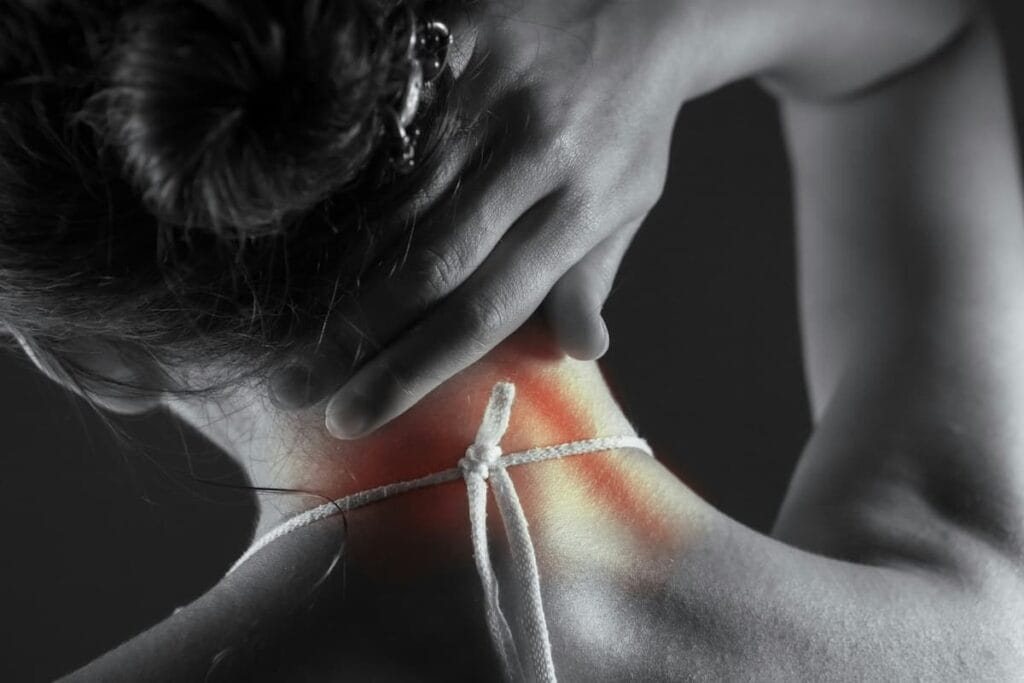
Neck pain that’s worse in the morning usually points to something about how you’re sleeping.
Why Neck Pain Feels Worse in the Morning
This isn’t just about comfort preference, there’s real mechanics behind it.
- Proper neck alignment means your ears stay roughly level with your shoulders while you sleep, and Cleveland Clinic specifically notes that the wrong pillow can cause or worsen neck pain depending on how well it maintains that alignment for your sleep position.
- A pillow that’s too flat lets your head drop back, while one that’s too high pushes it forward, both force your neck muscles and ligaments to work overtime holding your head steady for hours, which is exactly why the stiffness shows up specifically in the morning.
- Sleep posture affects more than just neck pain, poor alignment that restricts the airway is also a recognized contributor to snoring, which is why the two often show up together rather than as separate, unrelated issues.
What I Found Digging Into the Research
That research led me to Derila Ergo, a butterfly-shaped ergonomic pillow with support wings designed to hold neck alignment through the night. I want to be upfront about something. Some third-party sites promoting this pillow frame it as addressing sleep apnea, which is a serious, medically diagnosed condition that a pillow cannot treat or cure. I want to be clear that’s not what I’m suggesting here, and it’s not a claim the official product page actually makes either. What the design reasonably addresses is posture-related snoring and neck strain, which is a meaningfully different, more modest claim.
What’s Actually Different About the Design
Here’s the honest breakdown of the design features:
- Support wings (front and back): Designed to cradle the neck and help maintain spinal alignment whether you’re on your back or side, which lines up with the general “ears level with shoulders” principle that shows up across the mainstream neck-pain research.
- Central core cutout: A chin rest area with a gap, intended to reduce pressure points, including for side sleepers who use headphones or need arm space.
- Cooling memory foam: Standard memory foam contouring, with a cooling layer, which is more about comfort than alignment specifically.
Worth knowing: this is a physical comfort product, not a supplement, so there’s no ingredient list to evaluate, the honest question here is really about design and materials, not clinical research.
I didn’t expect neck pain to become a daily thing just from switching pillows.
Deciding to Try It
It ships flat-packed and expands to shape after unboxing, standard for memory foam pillows.
What I Actually Noticed
I want to be honest instead of dramatic. The first couple of nights felt a little unfamiliar, the shape is genuinely different from a standard pillow. By about night five, the morning neck-check-the-clock stiffness was noticeably less sharp. The snoring comments became less frequent too, though I’ll admit that’s based on my husband’s reporting, not something I can verify myself.
Who Should Talk to a Doctor First
If you snore loudly, gasp or choke during sleep, or have been told you stop breathing while asleep, please talk to your doctor about that specifically. Those are signs that need a real sleep evaluation, not a new pillow. A pillow is a comfort and posture product, it is not a substitute for diagnosing or treating sleep apnea, and no ergonomic pillow should be used as a reason to delay that conversation or stop a prescribed treatment like a CPAP machine. If your neck pain is severe, radiates down your arm, or comes with numbness or weakness, that also needs medical attention rather than a new pillow.
A Few Practical Things Worth Knowing
Buy from the official site only. The guarantee runs 60 nights.
A Few Small Habits I Added Alongside It
I started actually doing a few slow neck rolls before getting out of bed instead of just sitting up immediately, since easing into movement seemed to help more than I expected. I paid closer attention to my mattress too, since a mattress that’s too soft can undo some of what a good pillow is trying to do for alignment. I also stopped falling asleep on my stomach on the couch some evenings, since that position twists the neck more than any other.
None of these changes were dramatic individually, but combined with the new pillow, mornings stopped starting with that first stiff-neck wince.
If your neck pain follows a predictable morning pattern, that’s useful information.
Why I Looked Into the Design Before the Reviews
Products in this category live and die on testimonials, and testimonials are easy to write regardless of whether they’re true. I made myself understand the actual alignment principle before reading a single review. The “ears level with shoulders” mechanism held up, it’s genuine, mainstream advice from sources like Cleveland Clinic. The sleep apnea framing some third-party sites use did not, and I’d encourage you to apply that same filter to anything you read in this space, including this article.
The Cycle I Didn’t Realize I Was Stuck In
Looking back, the pattern is clear. Flat pillow, neck works overtime holding position all night, stiff morning, and I never once questioned the pillow itself because it had just always been there, quietly getting worse as it aged rather than failing all at once.
What I’d Tell Someone Just Starting to Notice This
If you’re only just starting to connect the dots, the first useful thing you can do costs nothing: check your current pillow’s shape in the morning. If it’s flattened out where your head rests and doesn’t spring back, that’s a concrete, checkable sign it may not be supporting your neck the way it used to.
Jaw tension and neck pain often show up together, something I explored in TMJ jaw pain and clicking.
How I Started
If mornings have started with a stiff neck before you’ve even gotten out of bed, it might be worth learning more about a design built around real, understandable alignment principles.
60-night guarantee, official site only.
Frequently Asked Questions
Is this a treatment for sleep apnea?
No. It’s a comfort and posture pillow, not a medical device. If you have symptoms of sleep apnea, talk to your doctor rather than relying on a pillow.
Is it good for side sleepers?
The support wings are designed to work for both back and side sleeping, with the central cutout intended to ease pressure for side sleepers specifically.
How long before I notice a difference?
Most people report initial comfort quickly, with fuller adjustment to the shape and alignment benefits over the first week or so.
This product is a comfort and posture pillow, not a medical device. It is not intended to diagnose, treat, cure, or prevent sleep apnea or any medical condition. If you experience loud snoring, gasping, or witnessed breathing pauses during sleep, consult your doctor.
Keep reading
More evidence-based guides for staying strong after 40.