
TMJ Jaw Pain and Clicking: What Actually Helped Me
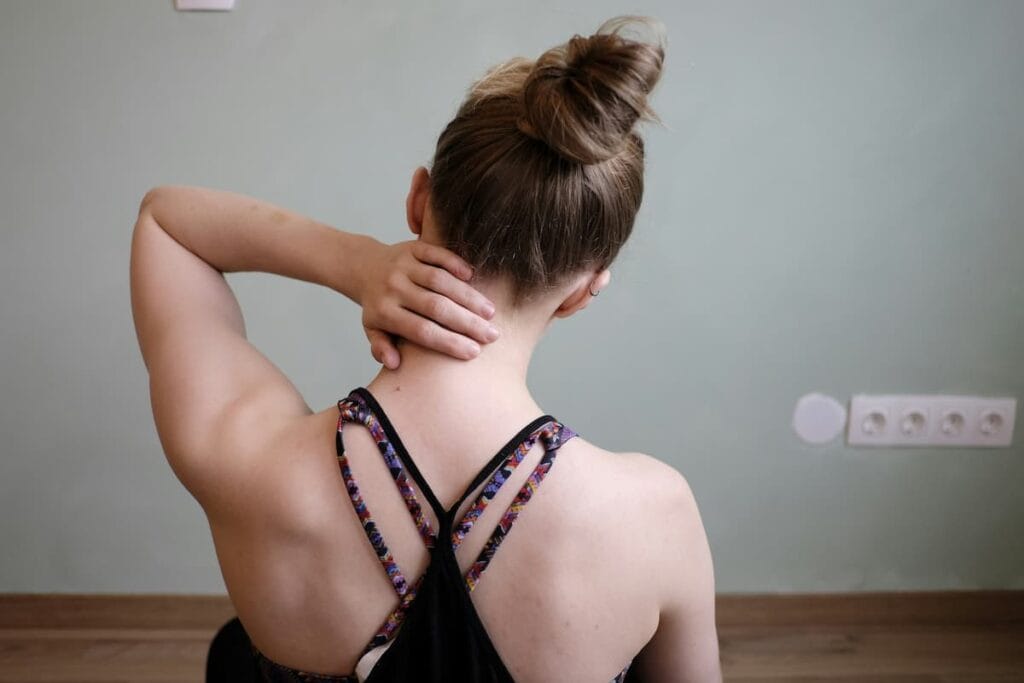
Quick Answer: TMJ jaw pain, clicking, and occasional locking are common signs of temporomandibular joint dysfunction, often caused by muscle tension, teeth grinding, stress, or poor posture. Gentle jaw, neck, and posture exercises are a legitimate first-line approach many dentists recommend, though persistent or worsening symptoms deserve a real evaluation.
TMJ jaw pain announced itself the day my jaw popped so loud during a video call that I muted myself, mortified, and spent the rest of the meeting talking with my hand half-covering my mouth.. That wasn’t the first time it had happened, just the first time anyone else could have heard it. Looking back, I’d been quietly adjusting around it for months — cutting sandwiches into smaller pieces, chewing more on one side, catching myself clenching my jaw during stressful moments at my desk.
What Causes TMJ Jaw Pain and Clicking?
- The temporomandibular joint connects your jaw to your skull, and it’s one of the most heavily used joints in your body — talking, chewing, and yawning all put it to work constantly
- Teeth grinding or clenching, often stress-related and frequently happening overnight without you realizing it, puts repeated strain on the joint and surrounding muscles
- Poor posture, especially forward head posture from sitting at a desk or looking down at a phone, pulls on the muscles connecting your neck, shoulders, and jaw
- Old injuries, misaligned bite, or arthritis in the joint itself can all contribute
- Because so many muscles connect the jaw to the neck and shoulders, tension in one area often shows up as pain in another
- I didn’t realize TMJ jaw pain could show up as clicking without much actual pain at first.
What I Found Digging Into the Research
Most dental sites I found were useful but brief — a paragraph on TMJ, then straight to “see your dentist.” True, but I wanted to understand the mechanics first. That’s how I found The TMJ Solution, a program by Christian Goodman through Blue Heron Health News. I’ll be upfront: the sales page leans heavily into one personal success story and frames it close to a guaranteed cure, which isn’t realistic for a condition with as many different causes as TMJ has.
What I found more useful was the actual approach underneath the marketing — treating the jaw as connected to the neck, shoulders, and posture, instead of just targeting the jaw in isolation, which lines up with what legitimate dental research (including NIDCR, the NIH’s dental research institute) says about TMJ having multiple contributing factors.
What’s Actually Inside the Program?
It’s a digital program, not a device or supplement — a set of movements organized into categories: jaw-specific exercises, throat and tongue exercises, shoulder and neck movements, breathing exercises, and posture work. Most take a few minutes and are meant to be done several times a week, not all daily.
There’s no independent clinical trial on the complete program — it’s built from the author’s own case interviews and testing with TMJ sufferers, which is a real distinction from studied, peer-reviewed programs, and worth knowing going in.
Deciding to Try It
It’s a one-time $47 digital download, delivered instantly with no physical shipping.
What I Actually Noticed
The clicking didn’t disappear overnight, and I want to be honest about that. What I noticed first was less jaw tension by the end of the workday, especially on days I remembered to do the neck and shoulder movements. The loud pop during calls became less frequent over a few weeks, though it hasn’t completely vanished. I still notice it occasionally when I yawn wide or eat something that needs a big bite.
Who Should Talk to a Doctor Before Trying This?
- If your jaw locks and won’t release on its own, that needs prompt attention from a dentist or oral surgeon, not exercises first
- Sudden, severe jaw pain, especially after an injury, should be evaluated before trying any home approach
- If you have a diagnosed misalignment or structural issue your dentist has already flagged, exercises are a possible complement, not a substitute for their treatment plan
- Jaw pain paired with chest pain, jaw pain radiating down your arm, or shortness of breath is a medical emergency, not a TMJ symptom — that needs immediate attention
- If TMJ jaw pain and clicking happens mostly when you chew, that’s a useful pattern to track.

A Few Practical Things Worth Knowing
It’s sold as a one-time digital purchase with a 60-day money-back guarantee processed through ClickBank.
Jaw tension and neck pain often show up together, which is something I explored in why getting out of bed started taking longer.
A Few Small Habits I Added Alongside It
- Set a few random phone reminders during the workday just to check whether I was clenching my jaw — I was, more often than I expected
- Started paying attention to my posture at my desk, since the neck connection turned out to be more relevant than I assumed
- Switched to chewing gum-free days, since I hadn’t noticed how often I was giving my jaw extra unnecessary work
Why I Didn’t Take the “Cured in 9 Days” Story at Face Value
The sales page centers on one dramatic personal recovery story, and treats it as the expected outcome rather than one possible result. TMJ has enough different underlying causes — grinding, posture, arthritis, old injury — that no single program cures it for everyone on the same timeline, or at all in some cases. I’d treat the exercises as a legitimate, low-risk first thing to try, not a guaranteed fix.
The Cycle I Didn’t Realize I Was Stuck In
I’d been unconsciously accommodating the pain for so long — smaller bites, one-sided chewing, careful yawning — that I’d stopped noticing I was doing it at all. It took an embarrassing, very public jaw-pop to make me actually look at what had quietly become normal.
What I’d Tell Someone Just Starting to Notice This
Start tracking when it happens. Is it worse in the morning (possible nighttime grinding) or by the end of a long workday (possible posture and stress tension)? That pattern alone points toward what’s likely contributing, before you spend money on anything.
How I Started
Once I noticed the pattern was stress- and posture-related rather than an old injury, I looked for something structured to follow instead of piecing together random exercise videos — which is how I ended up trying Christian Goodman’s program.
Frequently Asked Questions
What causes jaw clicking?
Most often, displacement or wear in the joint’s cartilage disc, frequently linked to grinding, clenching, or muscle tension around the jaw.
Can TMJ get better without a mouth guard?
For many people, yes — posture correction, stress management, and targeted exercises can meaningfully reduce symptoms, though a mouth guard is still the right call for active nighttime grinding.
Is jaw clicking always something to worry about?
Not necessarily. Painless clicking is common and often not urgent, but clicking with pain, locking, or a recent injury should be checked by a dentist.
How long does it take to notice improvement?
Reports vary widely — some people notice small changes within a couple of weeks with consistent practice, others take longer, and results aren’t guaranteed for everyone.
This statement has not been evaluated by the Food and Drug Administration. This product is not intended to diagnose, treat, cure, or prevent any disease. Always consult a qualified dentist or doctor before starting any new health program, especially if you have jaw locking, recent injury, or diagnosed structural issues.
Keep reading
More evidence-based guides for staying strong after 40.