
Bleeding Gums: Why My Dentist Keeps Saying “Let’s Watch It”
Quick Answer: Bleeding gums that keep coming back despite good brushing and flossing usually point to bacterial biofilms that resist mechanical cleaning alone — not a hygiene failure. Postbiotic ingredients and well-established options like xylitol can support the bacterial side of the picture, though bleeding gums can also signal blood-thinning medication use, vitamin deficiencies, or hormonal changes, so it’s worth mentioning to your dentist regardless of what else you try.
My dentist said it in that careful, professional tone that somehow made it worse. “Your gums are bleeding more than they should be when you brush. Nothing alarming, but let’s keep an eye on it.” I nodded, said I’d floss more, and drove home thinking about how I’d been hearing some version of that sentence at every checkup for the past three years.
I brushed twice a day. I flossed, most days, if I’m honest. I used mouthwash. And yet every six months, the same gentle warning, the same faint taste of blood when I spat after brushing. It stopped feeling like a hygiene problem and started feeling like something I was just going to live with.
Why Brushing Harder Doesn’t Actually Fix Bleeding Gums
Most oral health advice focuses on mechanical cleaning, brush more, floss more, use the right toothpaste. That matters, but it’s only part of the picture. The bacteria responsible for plaque and gum inflammation don’t just sit on your teeth waiting to be scrubbed off. They form organized colonies that can resist brushing, flossing, and even some antibacterial rinses.
- Oral bacteria form protective biofilms, structured communities that are genuinely harder to disrupt than loose bacteria, which is part of why the same problem areas keep coming back no matter how carefully you brush them.
- Probiotic approaches for oral health have grown popular, but live bacteria face a real obstacle: saliva’s natural enzymes are specifically built to break down bacteria, which limits how much a live probiotic can actually survive and do its job in your mouth.
- This is where postbiotics differ, since they’re not living organisms that need to survive saliva, they’re the beneficial compounds bacteria produce, delivered directly and already stable.
What I Found Digging Into the Research
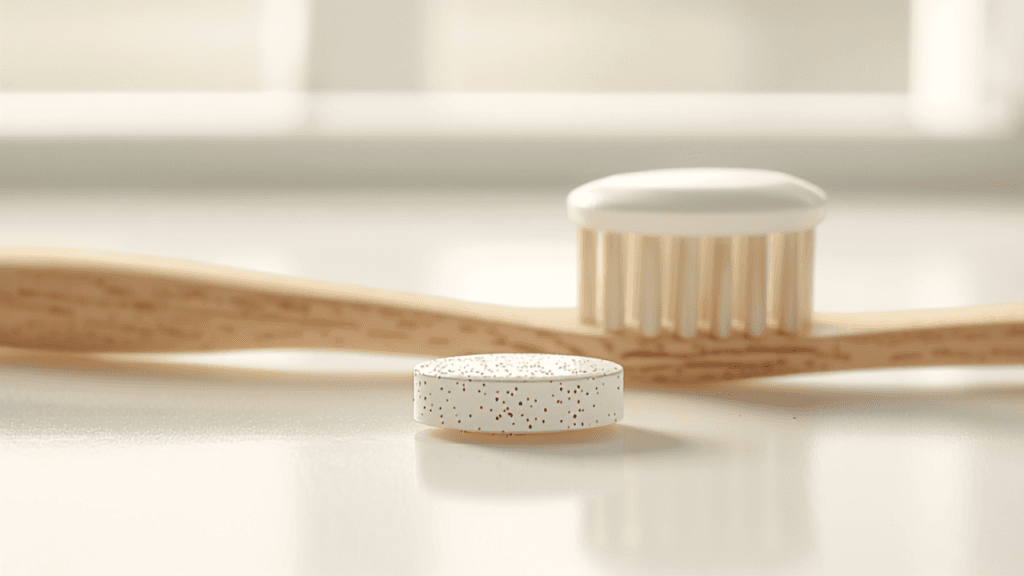
My research led me to DentaBiome, a chewable tablet built around postbiotic strains rather than live probiotics. I want to be upfront: the official marketing leans on a dramatic origin story about a specific enzyme and “military research” that I’d treat as marketing flourish rather than settled science. What actually held up was the more basic postbiotics-for-oral-health research underneath it, plus one very well-established ingredient.
What’s Actually Inside It
- L. Plantarum (postbiotic strains): Studied for producing antimicrobial compounds relevant to plaque bacteria and oral acid balance.
- L. Rhamnosus: Studied for supporting gum health and reducing markers associated with gum disease bacteria.
- Xylitol: The most independently well-established ingredient here, xylitol has decades of dental research behind it for reducing cavity-causing bacteria and supporting enamel health.
- Cranberry Extract and Purple Carrot Powder: Antioxidant-rich ingredients included for general oral tissue support.
As with most proprietary blends, individual amounts per strain aren’t broken out on the label, worth knowing upfront. Bleeding gums every single checkup for three years made me stop believing it was just a brushing problem.
Deciding to Try It
The routine is about as simple as it gets: one chewable tablet daily, no water needed, no swallowing capsules.If bleeding gums keep happening despite good oral hygiene, that pattern usually points to something else.
What I Actually Noticed
I want to be honest instead of dramatic. Nothing changed in the first week. Around three to four weeks in, at a routine cleaning, the hygienist actually asked if I’d changed my routine, less bleeding than my last visit. I hadn’t changed my brushing or flossing habits, which is the only reason I felt comfortable crediting this specifically.
Who Should Talk to a Dentist First
This isn’t a substitute for regular dental checkups or treatment for an existing gum disease diagnosis. If you have persistent pain, loose teeth, or gum bleeding that’s severe or sudden, that’s a dental visit, not a supplement decision. If you’re pregnant, nursing, or managing an existing health condition, mention it to your dentist before adding this. Bleeding gums can also be a side effect of blood-thinning medication, or a sign of a vitamin C or K deficiency — worth mentioning to your dentist if it doesn’t improve with consistent oral care.
A Few Small Habits I Kept Alongside It
I didn’t treat this as a replacement for basic care. I kept brushing twice daily and flossing, and actually got more consistent about it rather than less. I cut back on sugary coffee drinks that used to sit in my mouth for hours during work calls. None of these changes were dramatic alone, but combined with the tablet daily, my next cleaning reflected the sum of all of it.
Why I Skipped the Dramatic Backstory
The official marketing leans hard into an origin story about a specific bacterial enzyme and military-funded research. I’d encourage reading that skeptically rather than as established fact. What convinced me wasn’t the story, it was that xylitol and postbiotic approaches for oral health both have real, separate research behind them, regardless of how the marketing frames the mechanism.
A Few Practical Things Worth Knowing
It’s a one-time purchase, not a subscription. The guarantee runs 60 days and covers returning bottles even if empty. Buy from the official site to make sure the guarantee applies.
Oral health issues often connect with jaw tension too, something I explored in TMJ jaw pain and clicking.
How I Started
If you’ve heard some version of “keep an eye on your gums” at your last few checkups too, it might be worth learning more about what’s actually inside a postbiotic oral formula, and deciding for yourself whether it fits into your routine.
Backed by a 60-day money-back guarantee.
Frequently Asked Questions
What are postbiotics?
Postbiotics are beneficial compounds produced by bacteria, delivered directly rather than relying on live bacteria surviving in your mouth.
Is DentaBiome a substitute for dental care?
No. It’s not a replacement for regular dental checkups or treatment of diagnosed gum disease.
What’s the most established ingredient?
Xylitol has the longest, most independently verified research history for oral health among the ingredients used.
How long before you notice a difference?
Most people who report results describe noticing changes around three to four weeks of daily use.
These statements have not been evaluated by the Food and Drug Administration. This product is not intended to diagnose, treat, cure, or prevent any disease, including gum disease. Not a substitute for professional dental care. Results vary by individual; consult your dentist before starting any new supplement.
Keep reading
More evidence-based guides for staying strong after 40.