
Vitamins and Supplements for Joint Pain: What the Evidence Actually Shows
Affiliate disclosure: This article links to a product review that contains affiliate links. If you buy through them, we may earn a commission at no extra cost to you. See our Editorial Policy.
This article is general information, not medical advice. We are not medical professionals. Check with your doctor or pharmacist before starting any supplement, especially if you take medication. Read our Medical Disclaimer.
The supplement aisle is full of products promising healthier joints. The honest picture is more modest: a few supplements have some evidence of a small benefit for some people, many have little or none, and none of them rebuilds cartilage or cures arthritis.
That doesn’t mean they’re all useless. It means it’s worth knowing which ones have research behind them, which carry safety risks, and what to expect before you spend money.
The Quick Summary
| Supplement | Evidence for joint pain | Notes |
|---|---|---|
| Glucosamine and chondroitin | Mixed. Large studies have found little or no benefit overall | Some people report improvement; may interact with warfarin |
| Turmeric / curcumin | Some small studies show modest benefit for knee pain | Poorly absorbed; can interact with blood thinners |
| Fish oil (omega-3) | Some benefit for rheumatoid arthritis; less clear for osteoarthritis | Mild blood-thinning effect at higher doses |
| Vitamin D | Helps only if you’re deficient | Not shown to reduce osteoarthritis pain in people with normal levels |
| Collagen | Limited, early research | Mostly small, industry-funded studies |
| Boswellia | Some small studies suggest modest benefit | More, larger studies needed |
| Hyaluronic acid (oral) | Limited evidence | Injected HA is a different, medical treatment |
| SAMe | Some evidence of modest pain relief | Can interact with antidepressants |
A Closer Look
Glucosamine and chondroitin
These are the most popular joint supplements and among the most studied. A large NIH-funded trial and several reviews have found that, overall, they don’t reduce osteoarthritis pain much more than placebo. Some people do report feeling better, and they’re generally well tolerated.
Safety: glucosamine may increase the effect of warfarin. Some glucosamine is made from shellfish, which matters if you have a shellfish allergy.
Turmeric and curcumin
Curcumin, the active compound in turmeric, has anti-inflammatory properties, and some small trials suggest modest pain relief in knee osteoarthritis. The research is promising but limited, and curcumin is poorly absorbed on its own, which is why many products add black pepper extract (piperine).
Safety: can increase bleeding risk with blood thinners and may cause stomach upset. High-dose supplements have been linked to rare cases of liver injury.
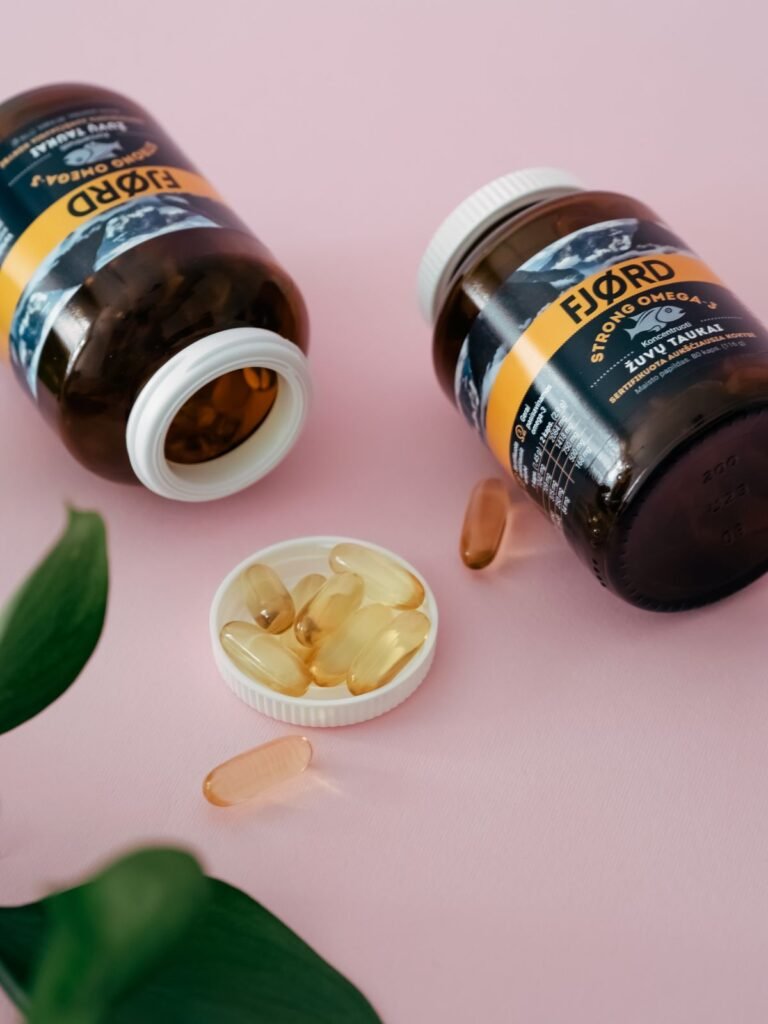
Fish oil (omega-3 fatty acids)
Omega-3s have the clearest evidence in rheumatoid arthritis, an inflammatory condition, where they may modestly reduce joint tenderness and stiffness. For osteoarthritis, the evidence is weaker.
Safety: may cause fishy aftertaste and stomach upset. Higher doses have a mild blood-thinning effect, so check with your doctor if you take anticoagulants.
Vitamin D
Vitamin D matters for bone health, and deficiency is common, especially with little sun exposure. But studies have generally found that taking vitamin D doesn’t reduce joint pain in people who aren’t deficient. Get your level checked rather than guessing.
Safety: high doses over time can cause too much calcium in the blood. More isn’t better.
Collagen
Collagen is a structural protein in cartilage, but eating collagen doesn’t mean it goes straight to your joints; it’s broken down during digestion. Early studies are small, and many are funded by manufacturers. It’s generally safe, but expectations should be low.
Boswellia
A resin used in traditional medicine. A few small trials suggest it may help osteoarthritis pain, but more research is needed.
Safety: generally well tolerated; may have a mild blood-thinning effect.
Combination products
Many joint supplements combine several of these ingredients. That makes it harder to know what’s working, and doses of each ingredient are sometimes low or undisclosed. If you’re considering one, read the label for exact amounts. Our Joint Genesis review is an example of how to compare a product’s doses against the research, including where it falls short.
Safety Checklist Before You Buy
- Tell your doctor or pharmacist, especially if you take blood thinners (warfarin, apixaban and others), diabetes medication, or antidepressants.
- Check for allergens, such as shellfish in glucosamine or fish in fish oil.
- Look for third-party testing marks (USP, NSF), since supplements aren’t regulated like medicines.
- Avoid stacking several products with overlapping ingredients.
- Stop before surgery if your doctor advises, particularly with anything that affects bleeding.
- Give it a fair trial and a stop date. If you notice no difference after two to three months, it’s probably not worth continuing.
What Works Better Than Any Supplement
The approaches with the strongest evidence for joint pain aren’t in a bottle:
- Strength training for the muscles around painful joints. This is consistently one of the most effective things you can do. See our morning stiffness routine.
- Regular low-impact activity such as walking, swimming or cycling.
- Weight management, which reduces load on knees and hips with every step.
- Physical therapy for a tailored plan.
- Heat for stiffness, ice for flare-ups.
- Doctor-guided treatments, including pain relievers, topical anti-inflammatory gels, and injections, when needed.
When to See a Doctor
- Joint pain that is severe, new or getting worse
- Swelling, redness or warmth in a joint
- Morning stiffness lasting more than an hour
- Several joints affected at once
- Pain with fever or feeling unwell
- Joint pain that limits daily activities
Inflammatory types of arthritis need early medical treatment, and no supplement is a substitute.
Frequently Asked Questions
What is the best vitamin for joint pain?
There’s no single best vitamin. Vitamin D helps if you’re deficient. For pain, exercise and weight management have far stronger evidence than any vitamin.
Does glucosamine work?
Large studies have found little overall benefit, though some individuals report improvement.
Is turmeric good for joint pain?
Some small studies suggest a modest benefit, but evidence is limited, and it can interact with blood thinners.
Can supplements rebuild cartilage?
No supplement has been shown to rebuild cartilage.
How long should I try a joint supplement?
Two to three months is a reasonable trial. If nothing changes, it’s probably not helping.
Are joint supplements safe?
Many are well tolerated, but several interact with medications, particularly blood thinners. Check with your pharmacist first.
The Short Version
Most joint supplements have modest or mixed evidence. Glucosamine has largely disappointed in big trials, turmeric and fish oil show some promise, and vitamin D helps only if you’re low. None rebuilds cartilage. Several interact with blood thinners, so talk to your pharmacist first. Strength training, regular movement and weight management help joints more reliably than anything you can swallow. For menopause-related aches, see can menopause cause joint pain.
Sources
NCCIH: Osteoarthritis and Complementary Health Approaches — https://www.nccih.nih.gov/health/osteoarthritis
NCCIH: Glucosamine and Chondroitin — https://www.nccih.nih.gov/health/glucosamine-and-chondroitin-for-osteoarthritis
NCCIH: Turmeric — https://www.nccih.nih.gov/health/turmeric
NIH Office of Dietary Supplements: Vitamin D — https://ods.od.nih.gov/factsheets/VitaminD-Consumer/
NCCIH: Omega-3 Supplements — https://www.nccih.nih.gov/health/omega3-supplements-what-you-need-to-know
Read our Editorial Policy.
Keep reading
More evidence-based guides for staying strong after 40.