
Losing My Balance: What Actually Helped
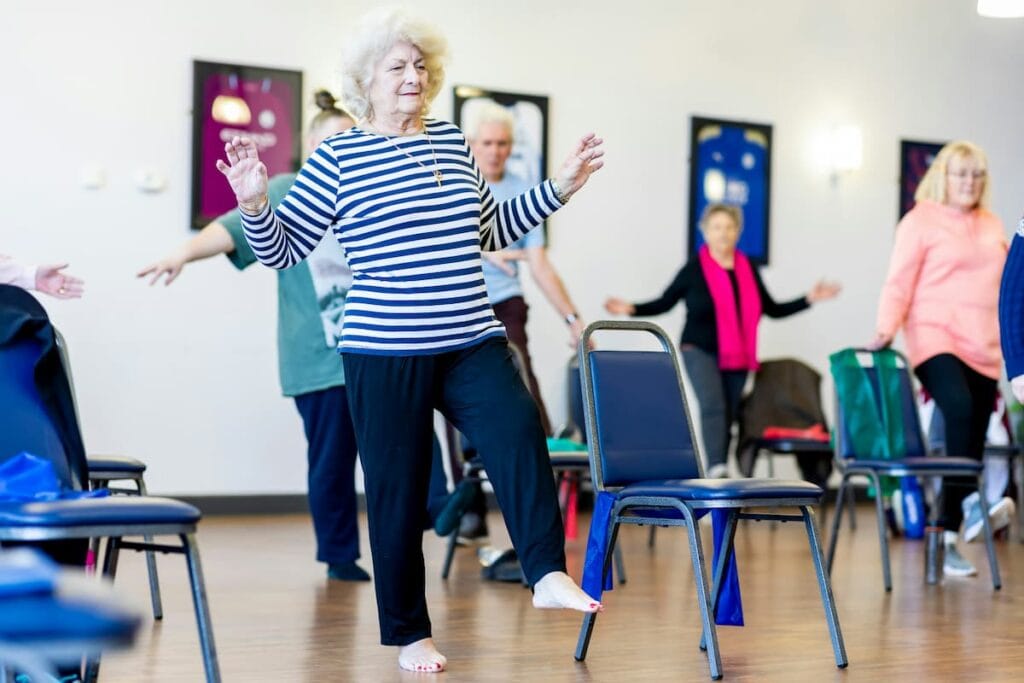
Quick Answer: Losing your balance more often after 50 is usually tied to a mix of factors — weaker muscles, slower nerve signals from your feet to your brain, inner ear changes, or side effects from certain medications. Targeted balance exercises can meaningfully reduce fall risk for most people, though sudden or severe balance changes should be checked by a doctor first to rule out inner ear or neurological causes.
I kept losing my balance stepping out of the shower — nothing dramatic, just a grab for the towel bar that wasn’t quite optional anymore. Then it happened reaching for a top shelf, and again stepping off a curb without looking. Each time felt small enough to laugh off on its own. Together, they added up to something I couldn’t keep pretending was nothing.
Why Am I Losing My Balance More Often?
- Balance depends on your inner ear, eyes, muscles, joints, and nerves all sending accurate signals to your brain at the same time — when any one system slows down, the whole system gets less reliable
- Muscle mass naturally declines with age, and weaker legs and core muscles make it harder to correct your position quickly when you start to tip
- Nerve signals from the feet, which tell your brain exactly how you’re positioned on the ground, can become less sensitive over time
- Certain medications can affect balance as a side effect — worth reviewing with your doctor or pharmacist if this feels new
- Vision changes reduce how well you judge distance and depth, which your brain relies on constantly to stay upright
- I didn’t expect losing my balance to become a daily concern at this age.
What I Found Digging Into the Research
Most of what I found was general advice — “stay active,” “do some yoga” — without explaining what was actually declining or why. That’s how I found Neuro-Balance Therapy, a program by Chris Wilson through Critical Bench. I’ll be honest: the sales page states balance problems have “nothing to do with getting older,” which isn’t accurate — age-related muscle and nerve changes are a real, documented factor, not a myth. What I found more credible was the underlying mechanism: the program focuses on the peroneal nerve and foot sensitivity as one contributing piece, alongside actual balance-training exercises, not instead of addressing the bigger picture.
What’s Actually Inside the Program?
It’s a physical DVD plus a textured rubber ball, with free instant digital access included. The exercises are organized by difficulty level — sitting exercises to build initial stability, standing exercises to build coordination, and more dynamic movements as you progress. There’s no independent clinical trial on the complete program itself, though the underlying concept (foot sensory training and proprioception work improving balance) lines up with legitimate physical therapy research the program cites, including sources from NIH and peer-reviewed gerontology journals.
Deciding to Try It
It’s a one-time payment of $47 for the physical DVD and ball, shipped to your door, with instant digital access while you wait.
If losing my balance keeps happening on uneven ground, it’s worth paying attention to.
What I Actually Noticed
The first two weeks felt like relearning something that should’ve been automatic. What I noticed first wasn’t dramatic balance improvement — it was that I stopped bracing for a stumble that hadn’t actually happened yet. By around week four, stepping off curbs and reaching for high shelves stopped being moments I braced for at all.
Who Should Talk to a Doctor Before Trying This?
- If balance changes came on suddenly, or are paired with vertigo, ringing in the ears, or hearing changes, that points toward an inner ear issue that needs proper diagnosis first
- Persistent or worsening balance problems can occasionally signal something more serious, including neurological conditions or stroke — this is not something to self-diagnose with exercises
- If you’re on medication and balance changes started around the same time, talk to your doctor or pharmacist before assuming it’s just aging
- This program itself notes it isn’t designed to address inner ear damage or advanced neurological disease — a real limitation worth knowing going in

A Few Practical Things Worth Knowing
It’s a one-time $47 payment with no recurring charges, backed by a 60-day money-back guarantee.
If mobility issues show up in other ways too, I’ve also written about why getting out of bed started taking longer.
A Few Small Habits I Added Alongside It
- Started doing the exercises barefoot at home, since footwear cushioning was apparently dulling the exact foot sensitivity the program was trying to rebuild
- Cleared a genuinely clear path to the bathroom at night instead of navigating around furniture half-asleep
- Started actually holding the handrail on stairs instead of treating it as optional
Why I Didn’t Take “Nothing to Do With Aging” at Face Value
The sales page frames the entire issue as unrelated to getting older, which is an overstatement — real research ties balance decline to age-related muscle loss and slower nerve signaling. That doesn’t make the exercises pointless, it just means I went in expecting a genuine contributing factor to address, not a myth-busting fix for aging itself.
The Cycle I Didn’t Realize I Was Stuck In
I’d quietly started avoiding things without noticing the pattern — skipping the step stool, holding onto counters longer than necessary, taking the long way around rather than stepping over anything. None of it felt like “a problem” until I added it up.
What I’d Tell Someone Just Starting to Notice This
Get a real baseline first — stand on one foot, eyes open, and time how long you can hold it steady. Do it again in a month. That single number tells you more than guessing ever will.
How I Started
Once I confirmed nothing about my meds or hearing had changed, I looked for something structured instead of vague “stay active” advice — which is how I ended up trying Chris Wilson’s program.
Frequently Asked Questions
Is losing my balance a normal part of aging?
It’s common, but “common” doesn’t mean unavoidable — muscle and nerve changes contribute, and targeted exercise can meaningfully help for most people.
How long before balance exercises show results?
Many people notice initial changes within a couple of weeks, with more meaningful improvement building over a month or more of consistent practice.
When is a balance problem an emergency?
Sudden balance loss paired with slurred speech, numbness, vision changes, or severe headache needs emergency care immediately — those can be stroke symptoms.
Can vision problems cause balance issues?
Yes — your brain relies heavily on vision to judge distance and stay upright, so an untreated vision change can show up as a balance problem.
This statement has not been evaluated by the Food and Drug Administration. This product is not intended to diagnose, treat, cure, or prevent any disease. Always consult a qualified healthcare provider before starting any new exercise program, especially if you have a diagnosed inner ear or neurological condition, or if balance changes came on suddenly.
Keep reading
More evidence-based guides for staying strong after 40.