Why Do Your Knees Hurt When You Wake Up But Feel Fine Later?
This article is general information, not medical advice. We are not medical professionals. See a doctor about joint pain that is new, severe, or getting worse. Read our Medical Disclaimer.
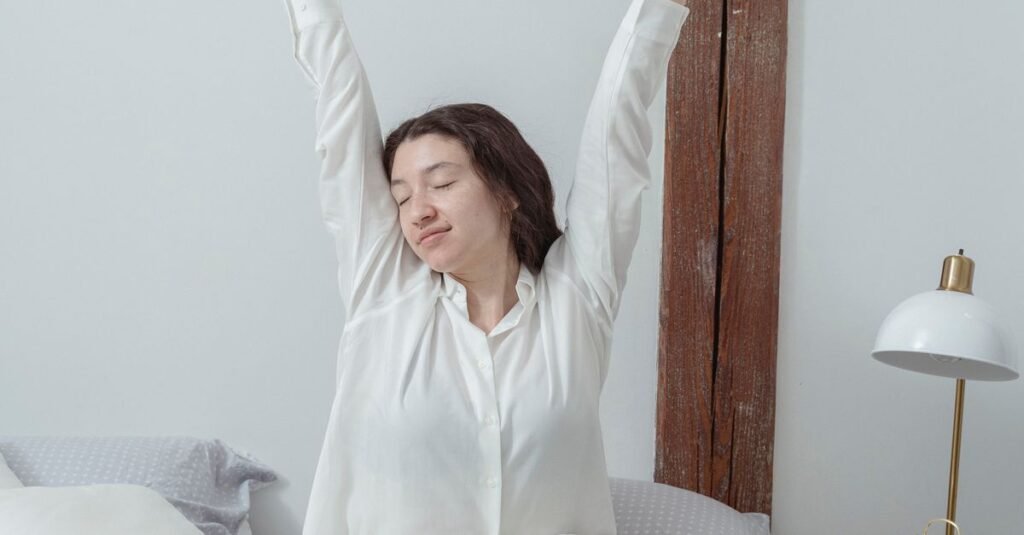
If your knees are stiff and sore the moment you get out of bed, but feel more or less normal by mid-morning, there’s a simple reason: your joints stiffen while you’re still, and movement loosens them again.
That pattern, bad on waking and better within about 30 minutes of moving, is the classic picture of ordinary age-related joint stiffness. It is very common after 40, and especially around and after menopause.
But there’s one important exception, and it’s worth knowing before you read any further. If the stiffness lasts longer than about an hour every morning, that’s a different pattern and it deserves a doctor’s
visit. Prolonged morning stiffness is one of the things doctors ask about when they’re considering inflammatory arthritis, which is treated very differently from everyday wear-and-tear stiffness.
Why Joints Stiffen Overnight
Your joint fluid thickens when you don’t move
Inside your knee is a small amount of synovial fluid, the slippery liquid that lets the joint surfaces glide. That fluid behaves a bit like honey: it flows more easily when it’s warm and being moved around, and it gets thicker and more sluggish when it sits still for hours.
Movement warms and redistributes it. That’s why those first few steps feel creaky and the tenth step feels fine.
Fluid settles into the joint overnight
When you lie flat for hours, a small amount of fluid can gather in and around the joint. That’s part of why knees and fingers can feel tight or slightly puffy in the morning and loosen as the day goes on.
Cartilage holds more water at night
Cartilage absorbs fluid when it isn’t bearing weight and releases it under load. After a night in bed, it’s at its most swollen, which can make the joint feel tight until you’ve been upright for a while.
Your body’s natural anti-inflammatory rhythm dips
Cortisol, which has an anti-inflammatory effect, follows a daily rhythm and is at its lowest in the small hours of the morning before rising around the time you wake. For some people that means inflammation-related discomfort is most noticeable early.
Things That Make Morning Knee Stiffness Worse
- A completely sedentary day before. Counterintuitive, but sitting still all day usually makes the next morning worse, not better.
- A sudden spike in activity. A long walk or a heavy gardening session after weeks of little movement often shows up as next-morning stiffness.
- Cold bedrooms. Cold tissue is stiffer tissue.
- Sleeping position. Knees held bent all night can feel tighter on waking.
- Extra body weight. Each extra pound adds load across the knee with every step, and the effect compounds over years.
- Poor sleep. Short or broken sleep is linked with higher pain sensitivity the next day, which is one reason menopausal sleep disruption and joint aches often arrive together.
What Actually Helps
Move before you stand up
Before your feet hit the floor, lie on your back and slowly bend and straighten each knee ten times, then make small circles with each ankle. This takes under a minute and gets the joint fluid moving before you ask the knee to carry your weight.
Warmth first, not cold
For stiffness, warmth is usually the better tool. A warm shower, a hot water bottle on the knee for 10 minutes, or simply a warmer bedroom. Cold is more useful for a swollen, angry, recently injured joint.
Build strength in the muscles around the knee
This is the single most evidence-backed thing you can do for long-term knee comfort. Strong quadriceps and glutes absorb load that would otherwise go through the joint. You don’t need a gym:
- Sit-to-stands: from a dining chair, stand and sit 10 times without using your hands. Build to 3 sets.
- Wall sits: back against a wall, slide down to a comfortable angle, hold 20 to 30 seconds.
- Straight leg raises: lying down, one knee bent, lift the straight leg to the height of the bent knee, 10 times each side.
- Heel slides: lying down, slowly slide one heel toward your bottom and back, 10 times each side.
Start smaller than you think you should, and build over weeks. Soreness that settles within a day is normal. Sharp pain is not.
Keep moving through the day
Short, frequent movement beats one long session. If you sit at a desk, stand up every 30 to 45 minutes, even just to walk to the kitchen.
Choose joint-friendly cardio
Walking, swimming, water aerobics and cycling all load the knee less than running or jumping. Swimming and water-based exercise are particularly useful if weight-bearing is uncomfortable right now.
Look at your sleep
If you’re waking several times a night, that’s worth addressing on its own, because poor sleep amplifies pain. Our guide on why you wake at 3am covers the common causes after 40.
Manage weight if it applies to you
Even a modest reduction in body weight meaningfully reduces the load passing through the knees with every step. This isn’t about appearance, it’s simple mechanics.
Is This Menopause-Related?
It can be. Joint aches are a common complaint around perimenopause and menopause, and estrogen appears to play a role in joint and connective tissue comfort. If your knee stiffness arrived around the same time as changes in your periods, sleep, or temperature regulation, they may well be connected. That’s worth raising with your doctor, who can talk you through the options for your situation.
When to See a Doctor
Book an appointment if:
- Morning stiffness regularly lasts longer than an hour. This is the big one.
- The knee is hot, red, or visibly swollen
- You have stiffness in many joints at once, especially fingers and both sides of the body symmetrically
- The knee locks, gives way, or you can’t put weight on it
- There’s pain that wakes you at night
- You have fever, unexplained weight loss, or feel generally unwell alongside the joint pain
- The pain is getting steadily worse over weeks rather than staying stable
None of these means something terrible is happening. They just mean the answer isn’t “ordinary stiffness,” and the right treatment depends on the right diagnosis.
Frequently Asked Questions
Is morning knee stiffness a sign of arthritis?
Not necessarily. Brief stiffness that eases within about 30 minutes of moving is extremely common and often just age-related. Stiffness lasting over an hour, particularly in several joints, is a different pattern worth getting checked.
Should I use heat or ice?
Heat for stiffness, ice for a swollen or recently aggravated joint. If you’re unsure, heat is the safer first try for morning tightness.
Will exercise make it worse?
The right exercise makes it better. Strength work around the knee and low-impact cardio are both well supported. The mistake is going from nothing to a lot in one week.
Do supplements help?
The evidence is mixed and generally modest at best, and no supplement treats arthritis or rebuilds cartilage. Strength, movement and weight management have much better support. If you’re considering a joint supplement anyway, read our honest look at Joint Genesis, including what it can’t do.
Why is it worse some mornings than others?
Usually the day before explains it: unusually high activity, unusually low activity, cold weather, or poor sleep.
Does cold weather really affect joints?
Many people report it does. The mechanism isn’t fully settled, but cold tissue is stiffer, and people tend to move less in cold weather, which doesn’t help.
The Short Version
Knees that hurt on waking and settle once you move are usually doing something normal: stiffening overnight and loosening with movement. Gentle movement before you stand, warmth, and steady strengthening of the muscles around the knee are the things that reliably help. If the stiffness lasts more than an hour, involves several joints, or comes with swelling and heat, see a doctor rather than waiting it out.
Sources
- NIAMS: Osteoarthritis — https://www.niams.nih.gov/health-topics/osteoarthritis
- NIAMS: Rheumatoid Arthritis — https://www.niams.nih.gov/health-topics/rheumatoid-arthritis
- MedlinePlus: Joint Disorders — https://medlineplus.gov/jointdisorders.html
- CDC: Physical Activity for Arthritis — https://www.cdc.gov/arthritis/
Read our Editorial Policy.
Keep reading
More evidence-based guides for staying strong after 40.