Is ProDentim a Scam? Honest 2026 Legitimacy Check
Disclosure: This post contains affiliate links. If you buy through them, we may earn a commission at no extra cost to you. This article is for informational purposes only and is not medical advice. Talk to your doctor or dentist before starting any supplement.
Short answer: ProDentim is not a scam — but it’s not as transparent as it should be either. It’s a real product, sold through ClickBank, with a real 60-day money-back guarantee. But the marketing around it has serious problems you should know about before buying.
Here’s the full honest breakdown.
5 Legitimacy Checks
1. Is the company real?
✅ Pass. ProDentim is sold through ClickBank, a legitimate US-based digital retailer that’s been processing supplement orders for over two decades. ClickBank enforces refund policies — if the vendor won’t refund you, ClickBank will. That’s a meaningful layer of buyer protection that outright scams don’t have.
2. Is it made in a real facility?
⚠️ Partial pass. The vendor claims FDA-registered, GMP-certified manufacturing in the USA. The “FDA-approved facility” phrasing some ads use is technically wrong — the FDA doesn’t approve supplement facilities. But FDA-registered + GMP-certified is the standard legitimate claim in this industry.
3. Are the ingredients real?
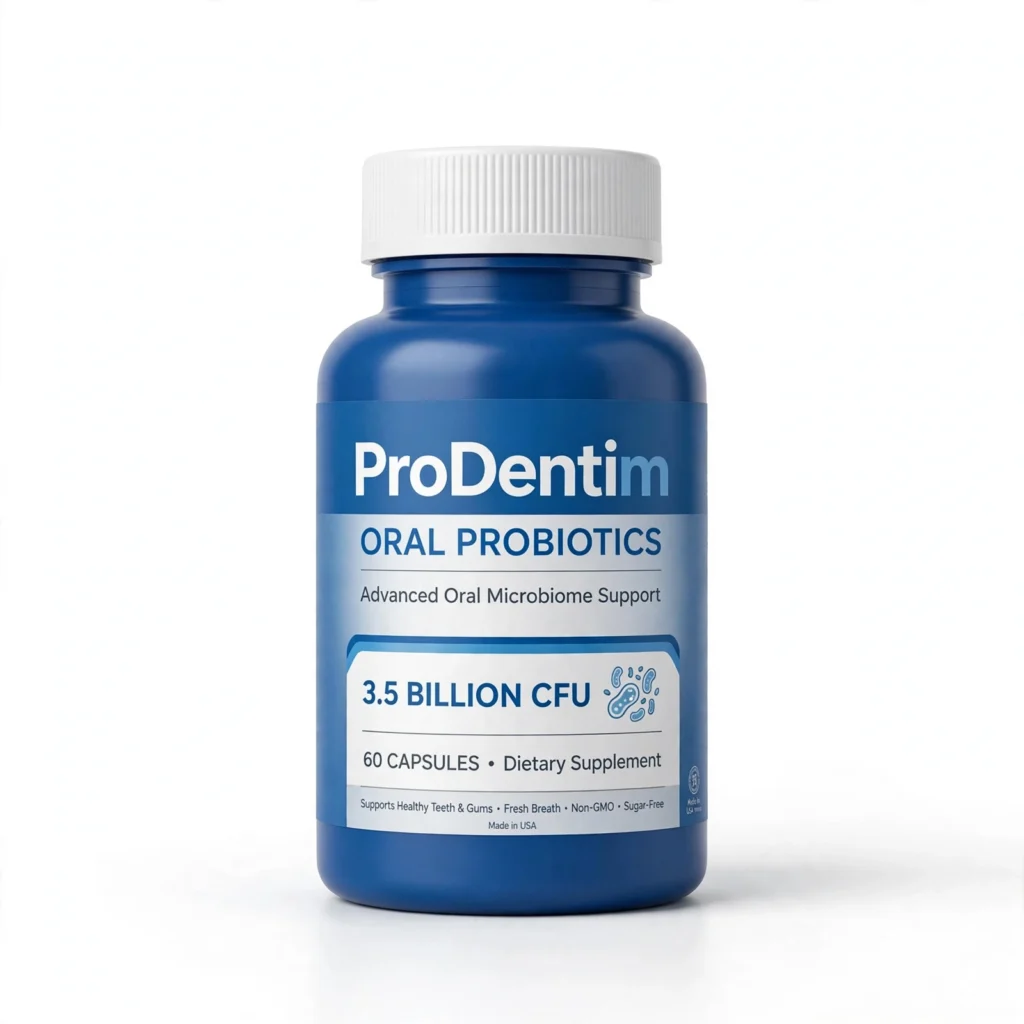
⚠️ The big problem. The official site claims “5 scientifically proven strains” and “3.5 billion CFU” but names zero strains and discloses zero doses. The strain list you see on review sites (L. Paracasei, L. Reuteri, B. Lactis BL-04, BLIS K-12, BLIS M-18) comes from affiliates — I couldn’t confirm it on the official page. A legitimate product should tell you what’s in it. This is ProDentim’s weakest point, and it’s a fair reason to hesitate.
4. Is the guarantee real?
✅ Pass. 60-day money-back guarantee, backed by ClickBank’s own refund enforcement. This is the strongest legitimacy signal ProDentim has. Scam products don’t offer refunds you can actually collect.
5. Is the marketing honest?
❌ Fail. This is where it gets ugly. The #1 Google result for “ProDentim review” is a paid advertorial — sponsored content dressed up as news — quoting “dentists” who can’t be verified. Some buy buttons in the ad ecosystem have pointed to the wrong domain entirely. Real product, dishonest marketing.
Red Flags to Know About
- Hidden formula: No strain names, no doses on the official site. You’re buying on trust.
- Advertorial deception: The top-ranking “review” is paid sponsored content, not journalism.
- Unverifiable endorsements: “Dentist recommended” quotes trace back to the advertorial, not real dental professionals.
- Hidden pricing: You can’t see prices until checkout.
- No clinical trials on the finished product — only general strain research.
What About Complaints?
Two patterns dominate real user feedback:
- “Didn’t notice a difference” — common with probiotics generally. Oral microbiome changes are slow and hard to self-assess. This isn’t proof of a scam; it’s the nature of the product category.
- Refund friction — some users report hassle getting refunds despite the guarantee. ClickBank’s involvement helps here, but document everything.
I found no widespread reports of serious adverse effects, which is consistent with probiotics’ generally mild safety profile.
The Buyer Playbook: How to Buy Safely
- Buy ONLY from the official website. Amazon and eBay listings risk counterfeits or expired stock — and only the official site honors the guarantee.
- Screenshot the guarantee terms at checkout (empty-bottle policy, who pays return shipping).
- Ignore the advertorial. If a “review” site’s buy button doesn’t go to the official domain, close the tab.
- Set a calendar reminder at day 50 — decide by then whether to keep it or request a refund.
- Keep your order confirmation email — you’ll need the order number for any refund request.
Go to the Official ProDentim Website →
Sources & References
- NCCIH: Probiotics — Usefulness and Safety — What probiotic science actually supports, and the importance of strain-specific evidence.
- FTC: Dietary Supplements Advertising Guide — Federal rules on what supplement marketers can and can’t claim.
- NIDCR: Gum (Periodontal) Disease — Evidence-based gum disease causes and treatments.
Frequently Asked Questions
Is ProDentim a scam or legit?
Legit product, problematic marketing. It’s real, sold via ClickBank, with an enforceable 60-day guarantee. But the hidden formula and advertorial-driven ads mean you should buy with eyes open — see my full ProDentim review for the detailed assessment (6.5/10).
Why do some people call it a scam?
Usually one of three reasons: the deceptive advertorial posing as a review, frustration with slow/unclear results, or refund difficulties. None of these make the product itself fake — but they’re valid complaints.
Is it safe to give my credit card to the official site?
Yes — checkout runs through ClickBank’s established payment processing. Use a credit card (not debit) for maximom chargeback protection.
What if it doesn’t work for me?
Use the 60-day guarantee. Request the refund before day 60, keep your order number, and go through ClickBank if the vendor is unresponsive.
Are the “dentist” endorsements real?
The ones in the advertorial can’t be verified and should be treated as paid marketing, not professional endorsements. No dental association endorses ProDentim.
Bottom Line
ProDentim is not a scam — it’s a real oral probiotic with a real refund policy. But it’s also not a transparent product: hidden strains, hidden doses, hidden pricing, and a deceptive advertorial at the top of Google. My rating remains 6.5/10 — interesting concept, weak transparency. Buy only from the official site, and only if you’re comfortable with the guarantee as your safety net.
Affiliate disclosure: This article contains affiliate links. we earn a commission if you purchase through them, at no extra cost to you. I did not personally test ProDentim. This article is for informational purposes only and is not medical advice.
Keep reading
More evidence-based guides for staying strong after 40.